The cocktail hour is the first impression your celebration makes. It is where guests arrive from the ceremony, find their footing, and begin to settle into the evening. A well-planned cocktail hour feels generous — abundant food, flowing drinks, beautiful space, and an atmosphere that invites connection.
This guide covers the elements of a luxury wedding cocktail hour, from food and beverage to space design and flow, so your New York City celebration opens with warmth and elegance.
The Purpose of the Cocktail Hour
The cocktail hour is the first impression your celebration makes. It is where guests arrive from the ceremony, find their footing, and begin to settle into the evening. A well-planned cocktail hour feels generous — abundant food, flowing drinks, beautiful space, and an atmosphere that invites connection. It sets the tone for everything that follows.
The cocktail hour serves a practical purpose too: it gives the couple and the wedding party time to take photographs after the ceremony while guests are entertained and fed. A well-run cocktail hour makes this gap feel like a gift rather than a wait; a poorly run one makes guests restless.
The best cocktail hours feel like a celebration already underway, not a holding area. The food is abundant and beautiful, the drinks are flowing, the space is inviting, and the energy is warm. Guests should feel welcomed and cared for from the moment they arrive.
- Abundant, beautiful food — passed hors d'oeuvres and stations
- A flowing bar with a signature cocktail and quality options
- A space designed for standing, mingling, and conversation
- Music that sets a warm, energetic tone without overwhelming
- Enough time to settle in — typically 60 minutes
- A seamless transition to dinner when the cocktail hour ends
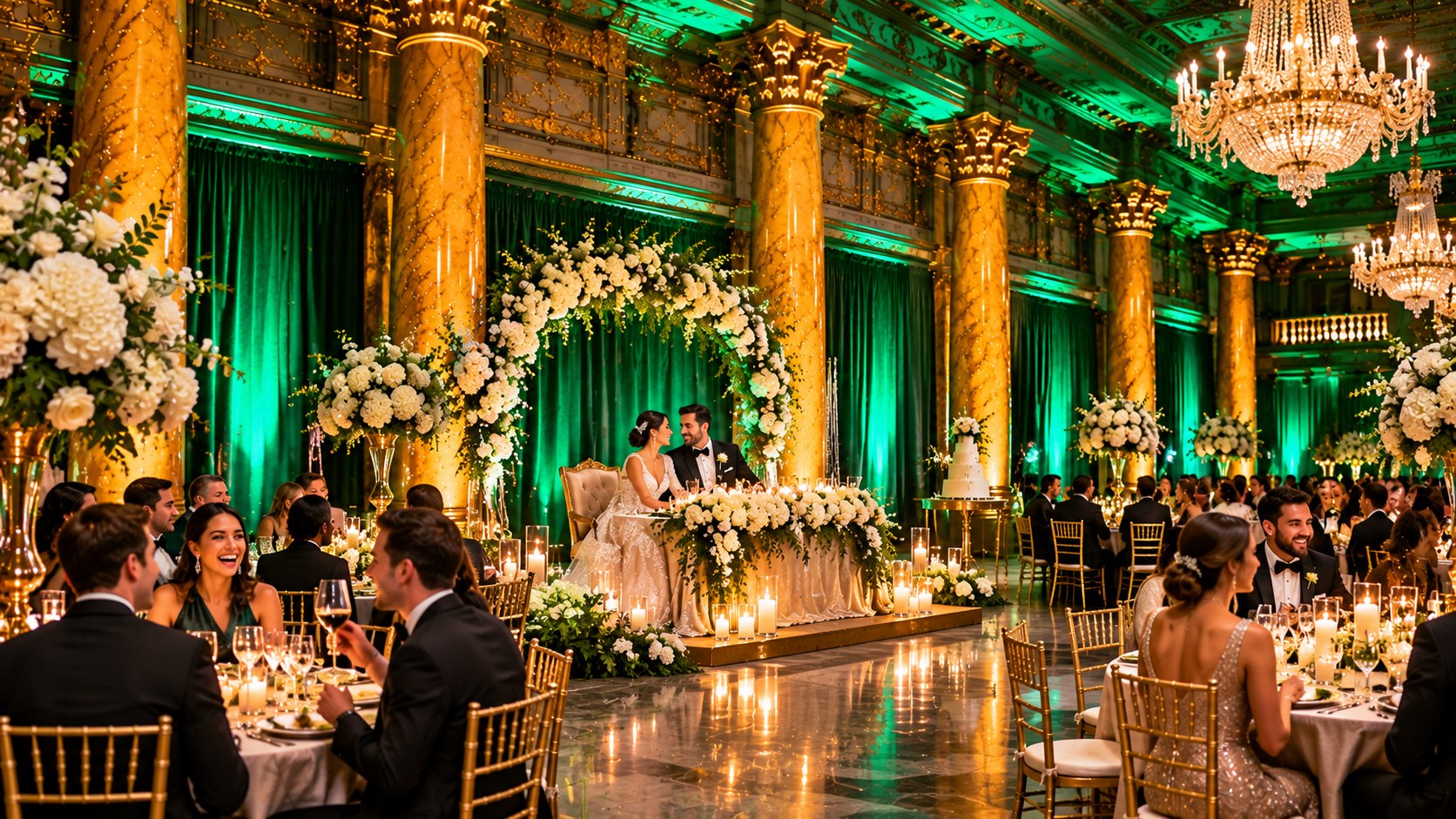
Food for the Cocktail Hour
The food at a cocktail hour should be abundant, beautiful, and easy to eat while standing and mingling. Passed hors d'oeuvres — carried through the crowd by servers — are the classic approach, often supplemented by one or two food stations. The food should feel generous; a sparse cocktail hour reads as stingy.
Cocktail hour food planning
Plan for variety and abundance. A common guideline is six to eight passed hors d'oeuvres per guest over the hour, with several options rotating through the crowd. Include a mix of proteins, vegetables, and vegetarian options, and ensure everything is bite-sized — guests are holding a drink and mingling, not sitting with a fork.
Consider a food station or two to supplement the passed items. A raw bar, a carving station, or a themed station adds abundance and gives guests something to visit. The stations should be designed as part of the decor, not afterthoughts. Discuss the quantity and variety with your caterer to ensure the hour feels generous.
- Six to eight passed hors d'oeuvres per guest over the hour
- A mix of proteins, vegetables, and vegetarian options
- Everything bite-sized and easy to eat while standing
- One or two food stations to supplement the passed items
- Dietary options clearly identifiable for guests with restrictions
- Enough abundance that the hour feels generous, not sparse
The Bar and Beverage Program
The bar is the social center of the cocktail hour, and its design and service shape the experience. A well-run bar flows — guests are served quickly, the drinks are quality, and the options are considered. A poorly run bar creates lines and frustration that color the whole evening.
Staff the bar sufficiently for the guest count. A common guideline is one bartender per fifty guests for a cocktail hour, with more for larger counts. Lines at the bar are the most common cocktail-hour failure; sufficient staffing prevents it. Confirm the staffing ratio with your caterer or bar service.
Offer a considered beverage program. A signature cocktail — a drink designed for the celebration — adds personality, alongside a full bar or a curated selection of wine, beer, and spirits. Non-alcoholic options should be equally considered; not every guest drinks, and a thoughtful mocktail or premium non-alcoholic option shows care.
Guest Experience Checklist
0/12Designing the Cocktail Hour Space
The cocktail hour space should be designed for standing, mingling, and movement — not seated dining. The layout, the furniture, the florals, and the lighting all should support a flowing, social atmosphere. A cocktail hour that feels like a dinner with the chairs removed misses the point.
Cocktail hour space elements
Use high-top tables and lounge areas rather than seated rounds. High-tops give guests a place to set a drink and rest without committing to a seat; lounge areas with low furniture create intimate conversation zones. The mix of heights and zones gives the room energy and flow.
Design the florals and lighting for the space. Low florals on the high-tops, a statement installation at the bar or the entrance, and warm, layered lighting create the atmosphere. The cocktail hour space should feel like a designed environment, not a waiting room. If the cocktail hour is in a different room from the reception, the design should transition as guests move.
- High-top tables for resting a drink without sitting
- Lounge areas with low furniture for conversation zones
- A statement floral installation at the bar or entrance
- Warm, layered lighting that invites mingling
- A layout that encourages movement and flow
- Music at a volume that allows conversation
Music and Entertainment
The music at a cocktail hour sets the energy. It should be warm and inviting — present enough to create atmosphere, but not so loud that guests cannot converse. A live ensemble — a jazz trio, a string quartet, or a contemporary acoustic group — adds elegance; a curated playlist can work if chosen with care.
A live ensemble is the classic choice for a luxury cocktail hour. A jazz trio brings warmth and sophistication; a string quartet brings formality; a contemporary acoustic group brings a modern energy. The ensemble should read the room — building energy as the hour progresses, then transitioning smoothly to the reception music.
If you use a playlist or a DJ, keep the volume at a conversation-friendly level and curate the selections to set the tone. The cocktail hour music is the first sound of the celebration; it should feel intentional. Coordinate the transition to the reception music — whether a band or a DJ — so the shift feels seamless.
The Transition to Dinner
The transition from the cocktail hour to dinner is a moment that should be managed, not left to chance. Guests need to know when and where to move, and the energy should carry from the cocktail hour into the reception. A well-managed transition keeps the celebration flowing; a chaotic one loses momentum.
Signal the transition clearly. A brief announcement, a change in music, or the opening of the reception doors tells guests it is time to move. The wedding party and the couple typically enter the reception after the guests are seated, often introduced by the band or the emcee. The sequence should be planned and rehearsed.
Coordinate with the venue and the caterer. The reception room should be set and the service team in place before guests arrive. The cocktail hour bar should remain open until the transition is complete, so guests are not left without a drink during the move. A smooth transition is invisible to guests; a rough one is the thing they remember.
Planning a Cocktail Hour in NYC
New York City's caterers and venues are experienced in running generous, elegant cocktail hours, and the city's density of talent — from ensemble musicians to mixologists — offers extraordinary options. The planning centers on abundance, flow, and a seamless transition to dinner. When you are ready to plan your cocktail hour, submit an inquiry for personalized guidance.
Begin with the food and the bar — the elements that make the hour feel generous. Plan abundant passed hors d'oeuvres and a considered beverage program, staff the bar sufficiently, and design the space for mingling. Choose music that sets the tone and plan the transition to dinner.
The cocktail hour is the first impression of the celebration, and its generosity and flow set the tone for the evening. Invest in it — a great cocktail hour makes the whole reception feel warmer, and a stingy one is hard to recover from.
Related planning resources
Frequently Asked Questions
These common questions address the details couples ask most when researching luxury wedding cocktail hours in New York City.
What is the purpose of a cocktail hour?+
It is the first impression of the celebration — where guests arrive, settle in, and the tone is set. It also gives the couple and wedding party time for photographs after the ceremony. A well-run cocktail hour makes the gap feel like a gift rather than a wait.
How long should a cocktail hour last?+
Typically 60 minutes. Long enough for guests to settle in, eat, and mingle; short enough that the energy does not drop. A cocktail hour that runs too long loses momentum; one that is too short feels rushed.
How much food do I need for a cocktail hour?+
A common guideline is six to eight passed hors d'oeuvres per guest over the hour, with several options rotating, plus one or two food stations. The hour should feel generous; a sparse cocktail hour reads as stingy.
What food works for a cocktail hour?+
Passed hors d'oeuvres that are bite-sized and easy to eat while standing, supplemented by one or two food stations — a raw bar, a carving station, or a themed station. Everything should be easy to eat while mingling.
How many bartenders do I need?+
Roughly one bartender per 50 guests for a cocktail hour, with more for larger counts. Lines at the bar are the most common cocktail-hour failure; sufficient staffing prevents them. Confirm the ratio with your bar service.
Should I offer a signature cocktail?+
A signature cocktail adds personality and gives guests a curated option alongside the full bar. It should be a drink designed for the celebration — something that reflects the couple or the season. Offer it alongside a full selection.
What non-alcoholic options should I provide?+
Thoughtful non-alcoholic options — a crafted mocktail, premium sodas, or a non-alcoholic signature drink. Not every guest drinks, and a considered non-alcoholic option shows care. Avoid offering only water and soda.
How should I design the cocktail hour space?+
For standing, mingling, and movement — high-top tables, lounge areas, and a flowing layout rather than seated rounds. The space should feel like a designed environment, not a waiting room. Mix heights and zones for energy.
What music suits a cocktail hour?+
Warm, inviting music at a conversation-friendly volume. A live ensemble — a jazz trio, a string quartet, or an acoustic group — adds elegance. The music should build energy as the hour progresses and transition smoothly to the reception.
How do I transition from the cocktail hour to dinner?+
Signal the transition clearly — an announcement, a change in music, or the opening of the reception doors. The reception room should be set and the service team in place. The cocktail bar should remain open until the transition is complete.
Can the cocktail hour be in the same room as the reception?+
It can, though a separate space allows a room turnover and creates anticipation. If the same room is used, the design should transition as guests move from cocktail to dinner — the lighting and the layout shift to mark the change.
What is a food station?+
A dedicated area with a specific menu and design — a raw bar, a carving station, a themed station. Stations add abundance and give guests something to visit. They should be designed as part of the decor, not afterthoughts.
How do I handle dietary restrictions at the cocktail hour?+
Ensure the passed hors d'oeuvres include vegetarian, vegan, and allergy-friendly options, clearly identifiable. Discuss the requirements with your caterer in advance so every guest has considered options, not afterthoughts.
What florals suit a cocktail hour?+
Low florals on the high-tops, a statement installation at the bar or entrance, and warm lighting. The cocktail hour space should feel designed, not bare. If it is a separate room, the design should complement the reception.
Should the cocktail hour have seating?+
Some — high-top tables for resting a drink and lounge areas for conversation — but not full seated rounds. The format is mingling and movement; full seating works against it. Provide enough rest points without making it a seated event.
How do I keep the cocktail hour from feeling like a wait?+
Abundance and flow. Generous food and drinks, a designed space, warm music, and attentive service make the hour feel like a celebration already underway. A sparse, bare cocktail hour feels like a holding area.
What is a welcome drink?+
A drink offered to guests immediately on arrival — often champagne or a signature cocktail — before they reach the bar. It sets a generous tone and makes guests feel anticipated from the moment they enter.
How do I coordinate the cocktail hour with the reception timeline?+
Build the cocktail hour into the reception timeline. It sits between the ceremony and the dinner, and its length shapes the evening. Coordinate the transition to dinner so the energy carries rather than drops.
What should I ask a caterer about the cocktail hour?+
Ask about the quantity and variety of passed hors d'oeuvres, the food station options, the bar staffing, the dietary accommodations, and the transition to dinner. A good caterer will plan the hour to feel generous.
How do I begin planning a cocktail hour in NYC?+
Start with the food and the bar — the elements that make the hour feel generous. Plan abundant passed hors d'oeuvres, a considered beverage program, sufficient bar staffing, and a space designed for mingling. Submit an inquiry for personalized guidance.