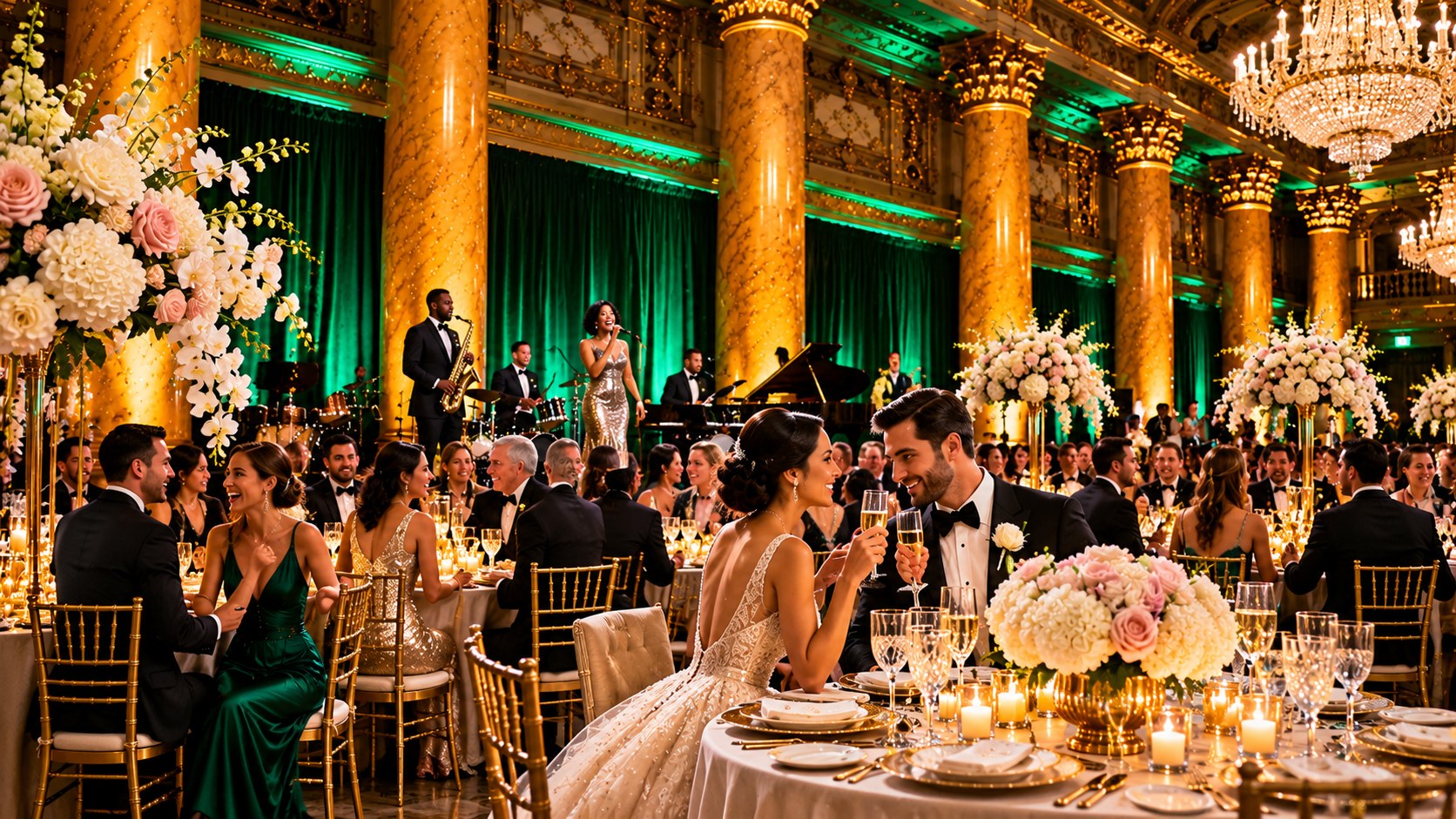
Guests remember how a wedding felt as much as how it looked. A luxury guest experience is built from countless small details — smooth arrival, comfortable temperature, attentive service, clear direction, generous hospitality — that together make guests feel cared for rather than merely hosted.
This guide walks through the guest experience from arrival to farewell, identifying the touchpoints that define a luxury wedding and the planning that makes them feel effortless in a New York City setting.
What Defines a Luxury Guest Experience
Guests remember how a wedding felt as much as how it looked. A luxury guest experience is built from countless small details — smooth arrival, comfortable temperature, attentive service, clear direction, generous hospitality — that together make guests feel cared for rather than merely hosted. The experience is the measure of the luxury.
The difference between hosting and caring for guests is attention. A hosted guest is fed and entertained; a cared-for guest feels anticipated. The coat is taken before it becomes a burden, the drink is offered before it is sought, the question is answered before it is asked. This anticipation is what makes an experience feel luxurious.
The guest experience spans the entire celebration, from the moment a guest receives the invitation to the moment they leave the farewell. Each touchpoint is an opportunity to show care or to create friction. Walk through the experience as a guest would, and remove friction at every step.
- Smooth arrival with clear directions and a welcoming entry
- A coat check and greeters so guests are received, not left to fend
- Comfortable temperature and a well-ventilated room
- Attentive service that anticipates rather than waits to be asked
- Clear signage and direction so guests never feel lost
- A farewell that sends guests off with warmth
The Arrival Experience
The arrival is the first moment of the guest experience, and it sets the tone for the entire celebration. A smooth, welcoming arrival makes guests feel cared for from the start; a chaotic one — unclear directions, a long walk, no one to receive them — starts the evening with friction that colors everything after.
Make the arrival clear and easy. Send directions with the invitation, confirm the entrance, and provide clear signage from the street to the door. If the venue is difficult to find or enter, station a greeter at the street to guide guests in. The first thirty seconds of the guest experience should feel effortless.
Receive guests at the door. A coat check, a greeter, and a welcome drink — offered immediately, not after a wait — make guests feel anticipated. The coat check should be staffed and efficient; a line at the coat check is a poor first impression. A glass of champagne or a signature cocktail offered on arrival sets a generous tone.
Guest Experience Checklist
0/12Comfort Throughout the Evening
Guest comfort is the foundation of the experience, and it is the element most easily overlooked. A room that is too hot or too cold, a chair that is uncomfortable, a sightline that is blocked — these small discomforts accumulate and define how the evening feels. Plan for comfort at every phase.
Comfort touchpoints
Temperature is the most common comfort failure. A room full of guests warms quickly, and a venue's climate control may not keep up. Confirm the venue's capacity to maintain a comfortable temperature with a full guest count, and plan for it. A room that grows hot over the evening is a comfort failure guests feel for hours.
Seating and sightlines matter through the ceremony and the dinner. Chairs should be comfortable for a long seated dinner; sightlines should allow every guest to see the ceremony and the program. Walk the room from the worst seat in the house and address what you find. Accessible seating for guests who need it should be planned, not improvised.
- Climate control that maintains a comfortable temperature with a full room
- Comfortable chairs for a long seated dinner
- Clear sightlines from every seat to the ceremony and program
- Accessible seating planned for guests who need it
- Sufficient, well-maintained restrooms with attendants
- A quiet area for guests who need a moment away from the crowd
Service That Anticipates
Luxury service anticipates rather than reacts. A server who refills a glass before it is empty, who clears a plate before it sits, who offers a drink before it is sought — this is service that makes guests feel cared for. The staff-to-guest ratio and the training of the team determine whether the service anticipates or merely responds.
Staff sufficiently for the guest count. A luxury dinner typically needs one server per ten to twelve guests for attentive service; a cocktail hour needs one bartender per fifty guests and a team of passed-hors d'oeuvres servers. Insufficient staffing is the most common service failure; it shows in lines, waits, and empty glasses.
Train the team to anticipate. Discuss the service approach with your caterer — how glasses are refilled, how plates are cleared, how dietary needs are handled, how the team moves through the room. A caterer experienced in luxury service trains its team to anticipate; one that is not will react, and the difference is visible.
Direction and Communication
Guests should never feel lost — not about where to go, what to do, or what comes next. Clear direction and communication, through signage, announcements, and a well-planned flow, keep the celebration moving and guests at ease. Confusion is friction; clarity is care.
Use signage generously. Welcome signs, direction to the ceremony, the cocktail hour, the restrooms, and the reception — clear, well-placed signage guides guests without making them ask. The signage should be designed as part of the decor, not printed as an afterthought. A beautiful sign that guides is a detail guests notice.
Communicate the program. A timeline card at the place setting, an announcement before key moments, or a program distributed at the ceremony — these tell guests what is coming and help them feel oriented. Guests who know what to expect are more relaxed than guests who do not.
Dietary and Personal Considerations
Caring for guests means caring for their individual needs. Dietary restrictions, accessibility, and personal considerations — planned in advance and handled gracefully — show the attention that defines luxury. A guest whose needs are anticipated feels seen; one whose needs are an afterthought feels overlooked.
Gather dietary requirements with the RSVPs and provide them to the caterer well in advance. A quality caterer designs alternative courses that match the formality of the main menu, served with the same care. Guests with restrictions should not feel singled out; the alternatives should arrive as seamlessly as the main courses.
Plan for accessibility. Guests who use a wheelchair, who cannot stand for long, or who have other needs should have their experience planned, not improvised. Confirm the venue's accessibility, plan accessible seating, and ensure every guest can participate fully. The attention to individual needs is what makes the experience feel personal rather than generic.
The Farewell and the Last Impression
The farewell is the last impression of the celebration, and it should match the warmth of the arrival. A well-planned farewell — a final moment with the couple, a late-night bite, a thoughtful send-off — closes the evening with the same care that opened it. The last impression lingers as long as the first.
Plan a farewell moment. A late-night bite — a small, comforting food as the evening winds down — gives guests a final gesture of hospitality. A send-off — sparklers, a vintage car, a gathered farewell — creates a memorable close. The farewell should feel like the culmination of the evening, not an abrupt end.
Consider the logistics of departure. If guests need transportation, arrange it and communicate it clearly. If the venue has a coat check, ensure it is staffed for the departure so guests are not waiting. The last five minutes of the guest experience should be as smooth as the first five. When you are ready to plan your guest experience, submit an inquiry for personalized guidance.
Related planning resources
Frequently Asked Questions
These common questions address the details couples ask most when researching luxury wedding guest experience in New York City.
What defines a luxury guest experience?+
Anticipation. A cared-for guest feels anticipated — the coat is taken before it is a burden, the drink is offered before it is sought. The difference between hosting and caring for guests is attention to the countless small details that remove friction.
How do I plan the arrival experience?+
Make it clear and easy — send directions, confirm the entrance, provide signage, and station a greeter if the venue is hard to find. Offer a coat check and a welcome drink immediately. The first 30 seconds should feel effortless.
What is the most common comfort failure at a wedding?+
Temperature. A room full of guests warms quickly, and a venue's climate control may not keep up. Confirm the venue can maintain a comfortable temperature with a full guest count. A hot room is a discomfort guests feel for hours.
How many restrooms do I need for my guest count?+
Sufficient, well-maintained restrooms with attendants are essential. The exact number depends on the guest count and the venue. Confirm the venue's facilities and consider supplemental restrooms for large counts. A line at the restroom is a comfort failure.
What staff-to-guest ratio does luxury service need?+
Roughly one server per 10 to 12 guests for a formal dinner, and one bartender per 50 guests for a cocktail hour. Insufficient staffing shows in lines, waits, and empty glasses. Confirm the ratios with your caterer.
How do I ensure clear direction for guests?+
Use signage generously — welcome signs, direction to the ceremony, cocktail hour, restrooms, and reception. Communicate the program through a timeline card or announcements. Guests who know what to expect are more relaxed.
How do I handle dietary restrictions gracefully?+
Gather requirements with the RSVPs, provide them to the caterer well in advance, and design alternatives that match the formality of the main menu. Serve them simultaneously so guests with restrictions are not singled out.
What should I plan for accessibility?+
Confirm the venue's accessibility, plan accessible seating, and ensure every guest can participate fully. Guests who use a wheelchair, who cannot stand for long, or who have other needs should have their experience planned, not improvised.
How do I plan the farewell?+
A late-night bite, a send-off moment, and smooth departure logistics. The farewell should close the evening with the same warmth as the arrival. The last five minutes should be as smooth as the first five.
What is a welcome bag and should I provide one?+
A bag for out-of-town guests at their hotel — a welcome note, a schedule, local information, and perhaps a small treat. It is a gesture of care for guests who traveled. It is optional but appreciated for a destination or largely out-of-town wedding.
How do I keep guests comfortable during a long evening?+
Plan for comfort at every phase — temperature, seating, restrooms, food pacing, and a quiet area for guests who need a break. A long evening is enjoyable when comfort is planned; it is exhausting when it is not.
What is a coat check and why does it matter?+
A staffed area where guests leave their coats on arrival and retrieve them on departure. It makes guests feel received rather than left to manage their belongings. A line at the coat check is a poor first and last impression.
How do I handle guests who cannot stand for long?+
Plan accessible seating at the ceremony and the cocktail hour, and ensure the reception has comfortable chairs. Identify guests who need accommodation in advance and arrange their experience. Do not leave it to improvisation.
What signage should I provide?+
Welcome signs, direction to the ceremony, cocktail hour, restrooms, and reception, and a timeline or program. The signage should be designed as part of the decor, not printed as an afterthought. Clear signage is care.
How do I communicate the program to guests?+
A timeline card at the place setting, an announcement before key moments, or a program distributed at the ceremony. Guests who know what to expect are more relaxed. Communicate the sequence so guests feel oriented.
What is a late-night bite?+
A small, comforting food offered as the evening winds down — a final gesture of hospitality. It is a thoughtful close to the celebration and gives guests a last moment of care before the farewell.
How do I plan transportation for guests?+
If guests need to move between venues or from hotels, arrange shuttles and communicate the schedule clearly. Plan the logistics so the movement is smooth. See our transportation planning guide for detail.
What should I walk through as a guest?+
Walk the entire experience from arrival to farewell — the entrance, the coat check, the ceremony seating, the cocktail hour, the dinner, the restrooms, the dance floor, the departure. Remove friction at every step.
How do I train the service team to anticipate?+
Discuss the service approach with your caterer — how glasses are refilled, how plates are cleared, how dietary needs are handled. A caterer experienced in luxury service trains its team to anticipate. Confirm the approach in advance.
How do I begin planning the guest experience in NYC?+
Walk through the experience as a guest would, from arrival to farewell, and remove friction at every step. Plan comfort, service, direction, and the personal details that make guests feel cared for. Submit an inquiry for personalized guidance.