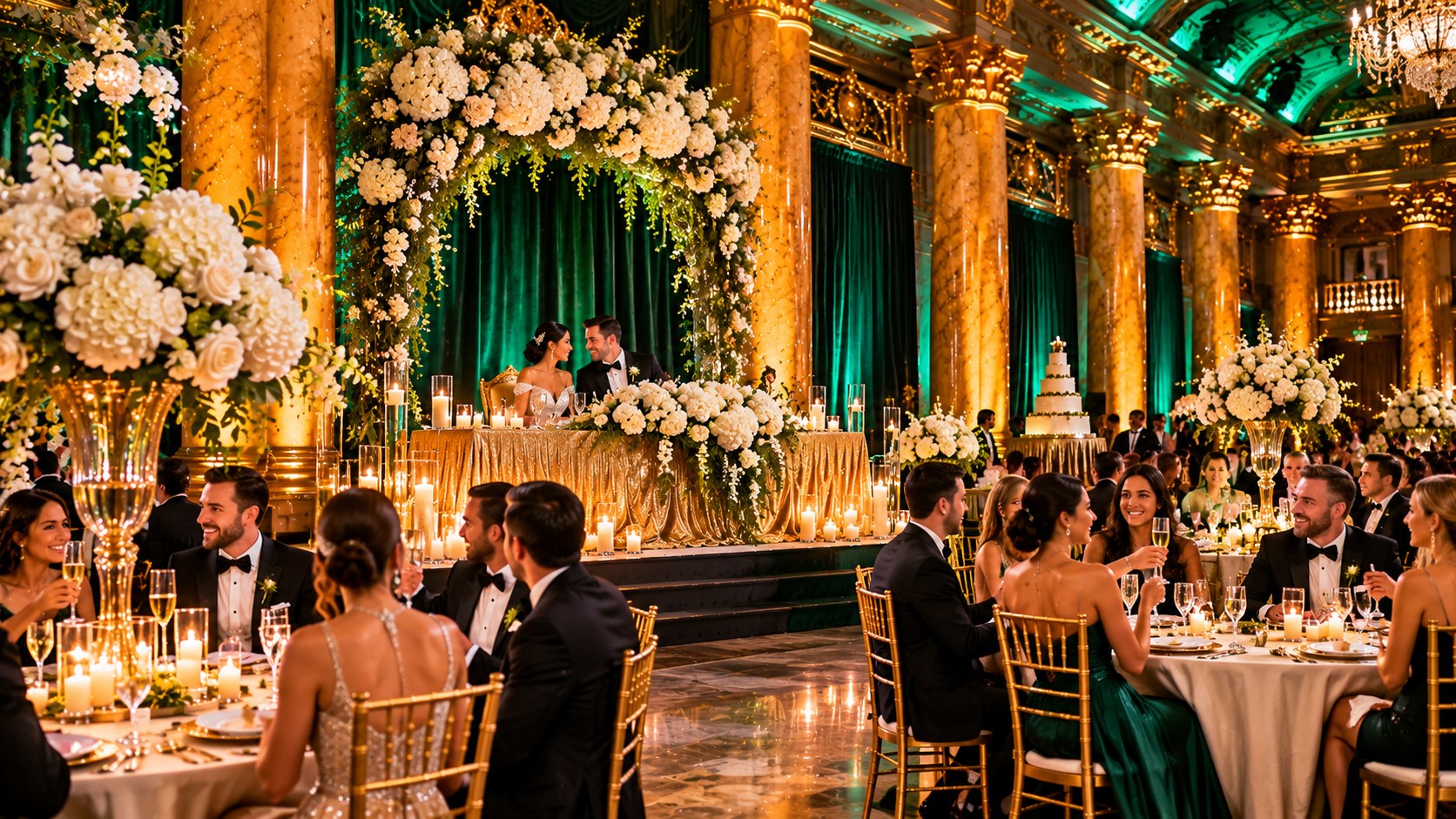
A ballroom is the most grand of wedding venues — a space defined by scale, architectural detail, and a sense of occasion that no other setting matches. New York City's luxury ballrooms, with their chandeliers, soaring ceilings, and landmark histories, host the city's most spectacular weddings.
For couples who want their celebration in NYC to feel grand, a ballroom is often the definitive choice. This guide covers what makes a luxury ballroom in NYC exceptional, how to plan a ballroom wedding, and how to make a grand space feel intimate enough for a meaningful celebration.
What Sets Luxury Ballroom Wedding Venues in NYC Apart in New York City
When couples begin researching luxury ballroom wedding venues in nyc in New York City, the conversation quickly moves beyond square footage and price. The settings that feel truly luxurious share a set of qualities that elevate the guest experience and give the couple confidence on the day. Understanding these qualities early helps you evaluate options with a consistent lens rather than being swayed by a single beautiful photograph.
Defining qualities to look for
How to read a space during a tour
The most reliable signal of a quality luxury ballroom wedding venues in nyc setting is how the space behaves under pressure — during a turnover, a service rush, or a full room. A venue that has hosted events at your scale will have rehearsed answers to the questions that matter: how the room reconfigures, where guests flow, how sound carries, and how the service team moves. These answers come from experience, not from a brochure.
In New York City, where real estate is among the most expensive in the world, generous proportions are themselves a form of luxury. A room that holds your guest count comfortably at every phase of the evening — arrival, ceremony, cocktail hour, dinner, and dancing — without crowding or echoing emptiness is harder to find than it sounds. Tour with your guest count in mind, not the venue's maximum.
Service standards separate a luxury venue from a merely expensive one. Ask about the staff-to-guest ratio for a seated dinner, the experience of the service team, and how dietary needs are handled. A venue that speaks fluently about these details is one that treats hospitality as a craft; one that deflects them is one that treats it as a checklist. The difference shows on the day, in the pace of the courses and the attentiveness of the staff.
Finally, consider the sense of arrival. The first thirty seconds a guest spends in a space set the emotional tone for the entire evening. A grand entrance, a thoughtful greeter, a coat check that runs smoothly, and a first glimpse of the room that takes the breath away — these are the moments that make luxury ballroom wedding venues in nyc feel luxurious rather than merely well-funded.
Walk the room as a guest would, from the entrance through every phase of the evening. Note where you would enter, where coat check sits, where the bar lines would form, and whether the dance floor feels central or peripheral. A space that flows on a tour will flow on the day; a space that feels awkward empty rarely improves when full.
Pay attention to the fixed elements you cannot change — columns, ceiling height, the location of the kitchen and restrooms, the natural light at the hour of your event. These constraints shape every design decision that follows. A venue that hides its constraints on a tour will reveal them on the day; a venue that points them out is one that will help you design around them.
Ask to see the space set for an event if you can, or at least ask for photos of a real wedding at your scale. A room dressed for a tour and a room full of guests are two different experiences, and the gap between them is where the surprises live. The more you can close that gap before booking, the more confident your decision will be.
- Architectural character that gives luxury ballroom wedding venues in nyc a sense of place and occasion
- Generous proportions that hold your guest count comfortably at every phase of the evening
- Dedicated event infrastructure — power, rigging, climate control, and acoustics tuned for live speech and music
- Professional coordination and a service team experienced at your scale
- Flexible layouts that adapt to your design vision and guest flow
- Convenient access with nearby accommodations and transportation for guests
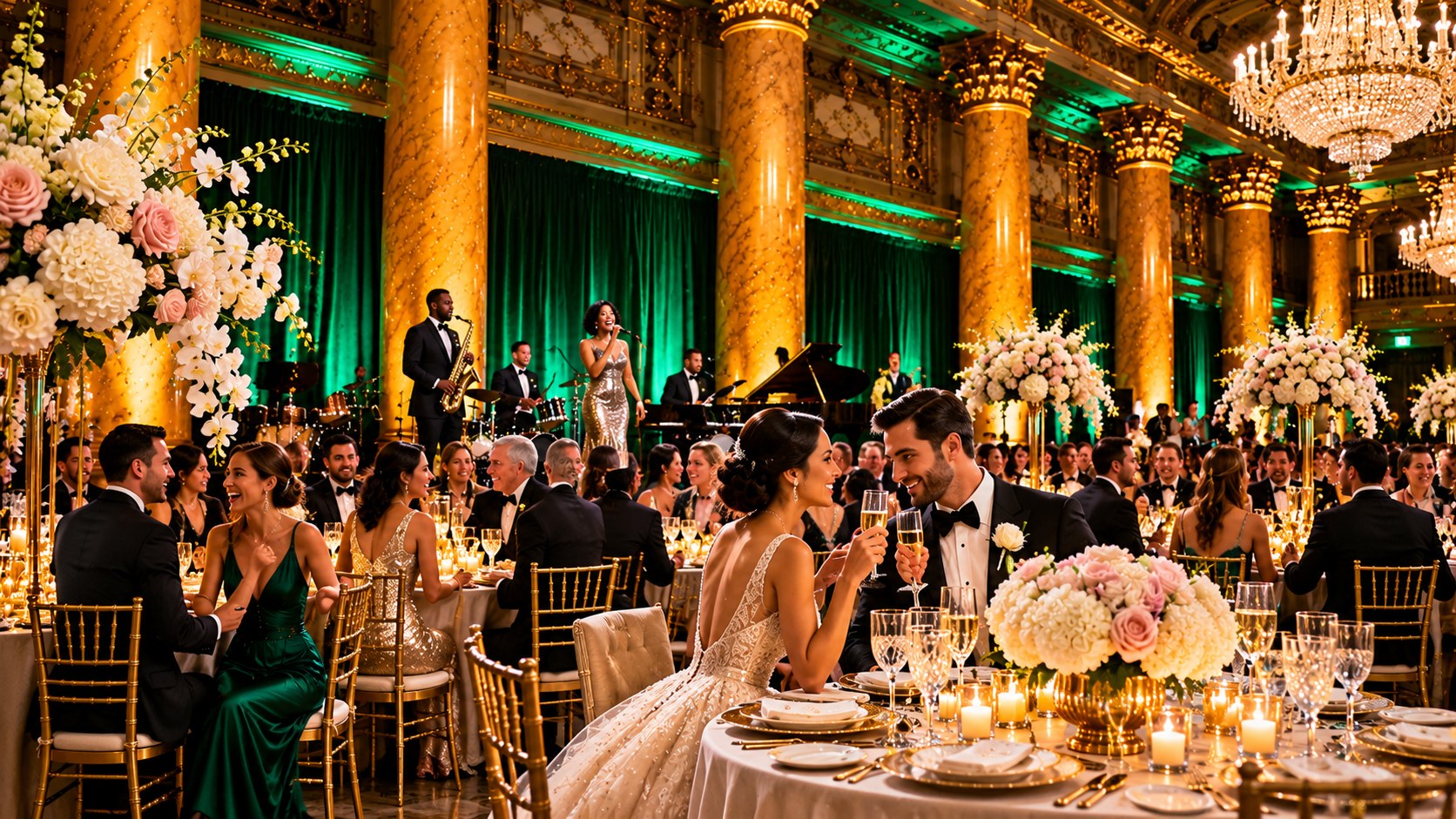
Categories and Settings Within Luxury Ballroom Wedding Venues in NYC
Couples researching luxury ballroom wedding venues in nyc in NYC encounter several distinct categories of settings, each suited to a different vision and guest count. Understanding these categories early helps narrow the search and clarifies which questions to ask during tours — a loft and a ballroom answer different questions.
Common setting categories
Choosing between categories
Grand ballrooms and landmark halls bring chandeliers, marble, and history — ideal for large formal celebrations where grandeur is the point. These settings typically accommodate several hundred guests and offer the infrastructure for elaborate production, from rigging points to dedicated power circuits.
Downtown lofts and industrial-chic spaces offer a different category entirely. Converted spaces with exposed brick, large windows, and clean architectural lines appeal to couples who want a modern, gallery-like canvas for custom design. These settings reward a strong design vision and a willingness to build atmosphere from a blank slate.
Intimate townhouse and boutique settings serve smaller guest lists with a sense of privacy and bespoke hospitality that larger venues cannot match. The trade-off is capacity — these settings cap out early — but the intimacy and personal attention they afford can make a smaller celebration feel extraordinary.
Outdoor and rooftop settings offer a seasonal category that trades climate control for skyline views and open air. These settings suit late spring through early fall and always require a weather contingency. When they work, they are unforgettable; when the weather turns, the quality of the backup plan determines whether the day is saved or spoiled.
The category you choose should follow your guest count and vision, not the other way around. A common mistake is falling for a setting that cannot hold the celebration you want, then compromising the guest list or the format to fit the space. Decide what you are celebrating and for how many, then find the category that holds it.
- Match the category to your guest count — a large ballroom can feel empty with fifty guests, and a small loft cannot hold three hundred
- Consider your design aesthetic — a blank loft invites transformation; a landmark hall is already the design
- Weigh exclusivity — single-event venues cost more but offer total privacy and design freedom
- Think about production — elaborate lighting and staging favor purpose-built venues with infrastructure
- Balance character against flexibility — a space with strong personality constrains your palette
Ceremony and Reception Considerations
A well-chosen setting for luxury ballroom wedding venues in nyc supports both the ceremony and the reception gracefully. Ask how the venue manages the transition between the two, whether a separate cocktail area is available, and how long the turnover takes. A well-managed transition is invisible to guests; a poorly managed one creates awkward downtime that breaks the energy of the evening.
Questions to confirm before booking
The turnover is the single most revealing test of a venue's operational experience. A venue that has done hundreds of turnovers will have a rehearsed sequence — guests directed to a cocktail space, the ceremony setup struck, dinner tables revealed — that takes minutes rather than the half-hour a less experienced team might need. Ask to see the turnover plan in writing.
Sightlines are the second test. In a long room, guests seated at the back should still feel connected to the ceremony, not merely present at it. Discuss options like a rotated ceremony layout, a raised platform, or video projection for very large spaces. The goal is intimacy at scale — a hallmark of a truly luxurious experience and one that does not happen by accident.
Sound is the third. Vows that do not carry to the back of the room break the ceremony's spell, no matter how beautiful the setting. Confirm the venue's sound reinforcement — microphones, speakers, and an operator — and test it if you can. A venue that takes ceremony audio seriously is one that takes the ceremony seriously.
- Can the space hold both ceremony and reception, or are separate rooms needed?
- How long does the turnover take, and where do guests go during it?
- Is there a dedicated cocktail-hour area distinct from the dining room?
- What is the sightline from every seat to the ceremony focal point?
- How are acoustics managed so vows carry clearly to every guest?
- Is there a private moment for the couple after the ceremony before greeting guests?
Guest Experience and Hospitality
Guests remember how a wedding felt as much as how it looked. For luxury ballroom wedding venues in nyc, plan the guest experience from arrival to farewell: smooth entry, coat check, comfortable temperature, attentive service, sufficient restrooms, and clear signage. Walk through the evening as a guest would and remove friction at every step — the small discomforts add up across a long evening.
Hospitality touchpoints that define the evening
In New York City, where many guests travel from out of town, hospitality extends beyond the venue itself to accommodations, transportation, and welcome materials. A guest who arrives flustered from a difficult journey starts the evening at a disadvantage; a guest who arrives smoothly starts it ready to celebrate. The venue's location and the logistics around it shape that arrival more than any decor choice.
The service team is the other half of the guest experience. Ask about the staff-to-guest ratio, whether service is in-house or through an outside caterer, and how the team handles the peak moments — the arrival rush, the course service, the bar during dancing. A venue that can describe its service in detail is one that has thought about it; one that cannot is one that will improvise on your day.
Temperature is the hospitality detail guests notice only when it is wrong. A room full of guests generates heat, and a space comfortable at two hundred may overheat at five hundred. Confirm the venue's climate control capacity for your guest count and ask how they manage temperature across the evening. Comfort is cumulative, and a warm room drags down every other element of the experience.
- Greeters and a coat check at the door for a polished welcome
- Passed cocktails and hors d'oeuvres during the arrival window
- Comfortable seating with clear sightlines to the program
- Dietary options clearly labeled and thoughtfully plated
- Accessible restrooms with attendants for a refined experience
- Late-night bites and a farewell moment that closes the evening warmly
Design, Decor, and Atmosphere
The design choices you make within luxury ballroom wedding venues in nyc shape the atmosphere of the entire evening. A restrained palette, quality materials, and a few extraordinary elements outperform many ordinary ones. Invest in lighting, florals, and tablescapes that frame the architecture rather than compete with it — the venue is the stage, not the rival.
Design priorities that signal luxury
Where to invest, where to edit
Lighting is the single most powerful design tool available in any setting. Layered lighting — ambient, accent, table, and dance-floor — shapes mood and can transform the room across the phases of the evening. Budget for a lighting designer as a priority, not an afterthought; the difference between designed and default lighting is the difference between a celebration and a banquet.
Florals and tablescapes bring warmth and personality. Sculptural arrangements, considered linens, and fine tableware signal luxury through texture and restraint rather than volume. A single extraordinary centerpiece per table, lit well, reads as more luxurious than a crowded arrangement that fights for attention.
The palette you choose should respond to the venue, not ignore it. A warm-toned room invites a different palette than a white-walled loft, and the most cohesive weddings are the ones where the design and the architecture are in conversation. Tour with a designer's eye for what the space already offers, then build your design to complement it rather than override it.
- Lighting design — the highest-impact spend per dollar
- Florals — quality of a few arrangements over quantity of many
- Tableware and linens — what guests touch and see up close
- Sound — clear ceremony audio and balanced reception volume
- Signage and stationery — minimal, beautiful, and consistent
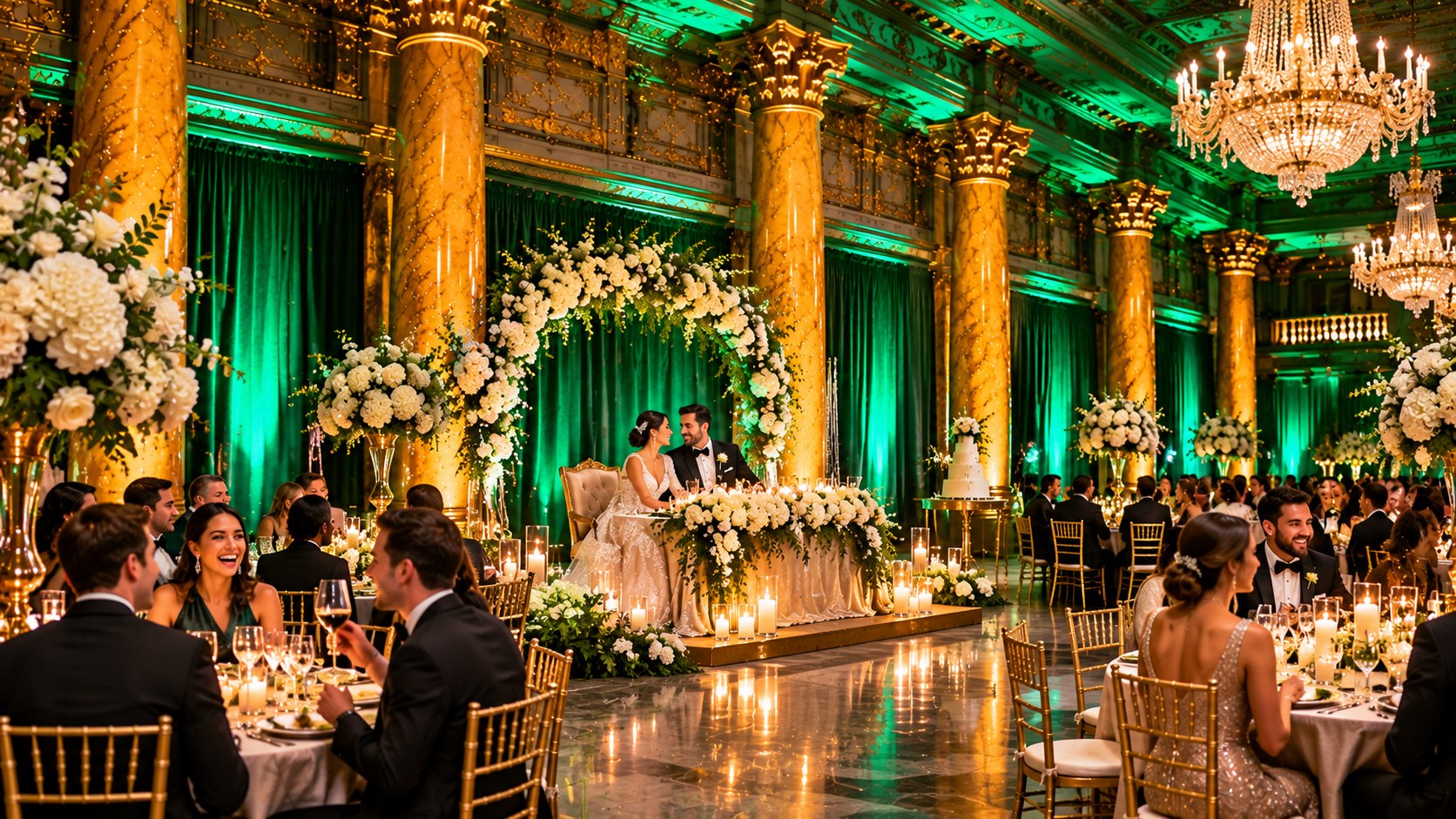
Planning Timeline and Logistics
The most sought-after luxury ballroom wedding venues in nyc in New York City book twelve to eighteen months ahead, especially for peak season weekends from May through October. Build a timeline that reserves the venue early, then layers in caterer, florist, entertainment, and production. A clear timeline reduces stress and keeps decisions in the right order.
A practical planning sequence
The sequence matters as much as the dates. Reserving the venue before booking vendors means your vendors design to the space rather than the other way around; finalizing the guest count before the seating plan means the plan fits the room. Couples who follow the sequence avoid the costly revisions that come from booking out of order.
- 12+ months out: set budget, reserve the venue, book a planner, draft the guest list
- 9–11 months out: book photo and video, reserve catering, choose florist, send save-the-dates
- 6–8 months out: plan menu and tastings, book entertainment, arrange transportation
- 3–5 months out: send invitations, finalize decor, book hair and makeup, plan rehearsal
- 1–2 months out: final headcount, seating chart, vendor confirmations, marriage license
- Day-of: vendor arrivals, ceremony timing, reception flow, farewell send-off
Budgeting and Cost Considerations
Costs for luxury ballroom wedding venues in nyc in NYC vary widely based on scale, exclusivity, and what is included. Compare venues on the total cost of the evening — site fee, catering minimums, service charges, rentals, and production — rather than the headline site fee alone. A venue that includes more may cost more upfront but reduce spend elsewhere.
Typical budget categories
The venue fee is the largest single line, but it is only the beginning. Catering minimums, service charges (typically 20–28%), taxes, required rentals, and production all flow from the venue choice. A less expensive venue that requires extensive rentals and production can ultimately cost more than a premium venue that includes infrastructure and service. Always request the complete cost picture before comparing.
The service charge is the line item couples most often misunderstand. It is not a gratuity that goes to the staff; it is a venue fee that covers overhead and administration, and it is added on top of the food and beverage subtotal. Confirm whether it is included in the quoted price or added at the end, and whether an additional gratuity is expected. The difference can be tens of thousands of dollars on a large guest count.
Hold a contingency reserve from the start — most experienced planners suggest 10–15% of the total budget — for the decisions that emerge after the initial plan is set. A contingency is not permission to overspend; it is a realistic acknowledgment that a complex event generates additions. Couples without a contingency cut from the elements they care about most; couples with one absorb the additions without sacrificing the vision.
- Venue and rentals — roughly 30% of total
- Catering and bar — roughly 22%
- Florals and decor — roughly 10%
- Photo and video — roughly 8%
- Attire and beauty — roughly 8%
- Music, stationery, and miscellaneous — the remainder
Wedding Budget Planning Worksheet
Enter your total budget to see a transparent suggested allocation. Percentages are illustrative starting points.
Assumptions: percentages are industry-typical starting points; adjust to your priorities. This is a planning aid, not a quote.
Location, Access, and Next Steps
In a city where guests may travel from several boroughs, hotels, and airports, location shapes the entire guest experience for luxury ballroom wedding venues in nyc. A Midtown venue offers proximity to hotels and transit; a Downtown venue offers character and a different energy. Consider parking, ride-share access, subway proximity, and the walk from arrival point to entrance — guests in formal attire appreciate a short, sheltered path.
Once you have a shortlist, request proposals and ask the questions in our venue interview guide. The right venue will answer thoroughly, transparently, and with genuine enthusiasm for your celebration. When you are ready to discuss specifics, submit an inquiry and we will help you refine your vision for luxury ballroom wedding venues in nyc in New York City.
Explore NYC Wedding Areas
Frequently Asked Questions
These common questions address the details couples ask most when researching luxury ballroom wedding venues in nyc in New York City.
What should I look for when researching luxury ballroom wedding venues in nyc in New York City?+
Focus on capacity for your guest count, architectural character, service standards, and the venue's experience with events at your scale. Tour a few representative options, use a consistent checklist at every visit, and request proposals from your shortlist before deciding.
How far in advance should I book luxury ballroom wedding venues in nyc in NYC?+
The most sought-after luxury settings in New York City book twelve to eighteen months ahead. Peak season (May through October) and popular weekends fill first, so begin research early and move quickly once you find the right fit.
What is the capacity I should plan for with luxury ballroom wedding venues in nyc?+
Capacities vary by format. Our featured setting accommodates 550 seated guests or up to 1,500 standing. Always confirm seated versus standing capacity for your specific format, since the guest experience differs significantly between a plated dinner and a standing reception.
Do luxury ballroom wedding venues in nyc host both ceremony and reception?+
Many do. Ask how the venue manages the transition between ceremony and reception, whether there is a separate cocktail area, and how long the turnover takes. A well-managed transition is invisible to guests; a poorly managed one creates awkward downtime.
What questions should I ask when touring luxury ballroom wedding venues in nyc?+
Ask about capacity for your format, included amenities, service staff ratios, catering policy, production infrastructure, exclusivity terms, and the full cost including service charge and taxes. Our questions-to-ask guide provides a complete checklist.
How much do luxury ballroom wedding venues in nyc in NYC typically cost?+
Costs vary widely based on scale, exclusivity, and what is included. Compare venues on the total cost of the evening — site fee, catering minimums, service charges, rentals, and production — rather than the headline site fee alone.
Are luxury ballroom wedding venues in nyc available year-round in New York City?+
Most indoor luxury venues operate year-round. Rooftop and outdoor settings are typically seasonal (roughly May through October). Confirm availability for your date and any seasonal considerations. A winter indoor celebration offers reliable comfort and often better availability.
Can I fully customize the decor at luxury ballroom wedding venues in nyc?+
Most luxury venues allow significant customization within their guidelines. Ask about rigging points, electrical capacity, restrictions on candles or installations, and load-in logistics. Venues with strong event infrastructure support more ambitious design.
Do luxury ballroom wedding venues in nyc include in-house catering?+
Some venues include in-house catering; others allow outside caterers or require selection from a preferred list. Confirm the catering policy and how it affects your menu options and overall budget.
What is the difference between seated and standing capacity at luxury ballroom wedding venues in nyc?+
Seated capacity accommodates a plated dinner with tables; standing capacity accommodates a cocktail reception. A venue that seats 550 may hold far more standing, but the flow, comfort, and pacing differ. Choose based on your preferred format.
How do I ensure guest comfort at luxury ballroom wedding venues in nyc?+
Plan for smooth arrival, coat check, comfortable temperature, sufficient restrooms, attentive service, clear signage, and accessible seating for those who need it. Walk through the guest experience from arrival to farewell and address any friction with your venue team.
Do luxury ballroom wedding venues in nyc offer exclusivity?+
Exclusivity varies by venue — full buyout, single-event, or shared common areas. Confirm exactly what exclusivity means at each venue and have it specified in your contract. See our wedding venue exclusivity guide for detail.
Which NYC neighborhoods are best for luxury ballroom wedding venues in nyc?+
Manhattan offers the highest density of luxury venues. Midtown is known for grand ballrooms, the Upper East Side for classic elegance, and Downtown (Tribeca, SoHo) for loft settings. Explore our NYC area guides for neighborhood-specific planning considerations.
Can luxury ballroom wedding venues in nyc accommodate dietary restrictions?+
A quality luxury venue accommodates vegetarian, vegan, kosher, halal, and allergy-specific needs. Discuss dietary requirements early and ensure every guest has a considered option, not an afterthought.
What is the service charge at luxury ballroom wedding venues in nyc?+
Service charges typically range from 20% to 28% on top of food and beverage, plus applicable tax. Confirm the full cost structure — site fee, catering minimums, service charge, gratuity, and taxes — when comparing venues.
Do luxury ballroom wedding venues in nyc provide a wedding coordinator?+
Many luxury venues provide a venue coordinator for logistics, but that role is distinct from a full wedding planner. A venue coordinator manages the venue side; a planner manages your entire event. Consider whether you need both.
How should I tour luxury ballroom wedding venues in nyc in NYC?+
Schedule tours, ideally when the space is set for an event so you can see it in action. Bring a consistent checklist, take photos, and note your impressions immediately after each visit while details are fresh.
What is typically included in the venue fee for luxury ballroom wedding venues in nyc?+
Inclusions vary. Some venue fees cover only the space; others include tables, chairs, basic lighting, and a coordinator. Clarify exactly what is included and what you must rent or bring in separately so you can compare total costs.
Can luxury ballroom wedding venues in nyc accommodate a large guest list?+
Yes, many luxury NYC venues accommodate large guest lists. Our featured venue seats 550 and holds up to 1,500 standing. Confirm capacity for your format and ask how the venue manages logistics at scale.
How do I begin planning my wedding with luxury ballroom wedding venues in nyc?+
Start by clarifying your vision and guest count, then research venues that fit. Tour representative options, request proposals, and ask thorough questions. When ready, submit an inquiry through our form to receive personalized guidance.