Lighting is the element that most determines how a wedding feels. A beautifully designed room with poor lighting feels flat; a plain room with exceptional lighting feels extraordinary. Luxury wedding lighting is layered, intentional, and dynamic — it shifts the room from ceremony to cocktail to dinner to dancing.
This guide covers the layers of luxury wedding lighting, how to work with a lighting designer, and the practical considerations for lighting a New York City venue so your celebration feels as beautiful as it looks.
Why Lighting Is the Most Powerful Design Tool
Lighting is the element that most determines how a wedding feels. A beautifully designed room with poor lighting feels flat; a plain room with exceptional lighting feels extraordinary. Luxury wedding lighting is layered, intentional, and dynamic — it shifts the room from ceremony to cocktail to dinner to dancing, giving each phase its own atmosphere.
The power of lighting is that it controls what guests see and how they feel. Bright, even lighting reads as a conference room; layered, directional lighting reads as a designed space. The lighting directs attention — to the florals, the couple, the dance floor — and shapes the mood of each moment.
A luxury lighting design is built in layers, each serving a purpose. Ambient light fills the room; accent light highlights florals and architecture; table light creates intimacy; dance-floor light creates energy. The layers work together and shift across the evening to move the celebration forward.
- Ambient light to fill the room at a comfortable level
- Accent lighting — pin spots — to highlight florals and centerpieces
- Architectural washes to color and define surfaces
- Table lighting — candles and low fixtures — for intimacy
- Dance-floor lighting that builds energy as the night progresses
- A lighting designer who programs the shifts across the evening
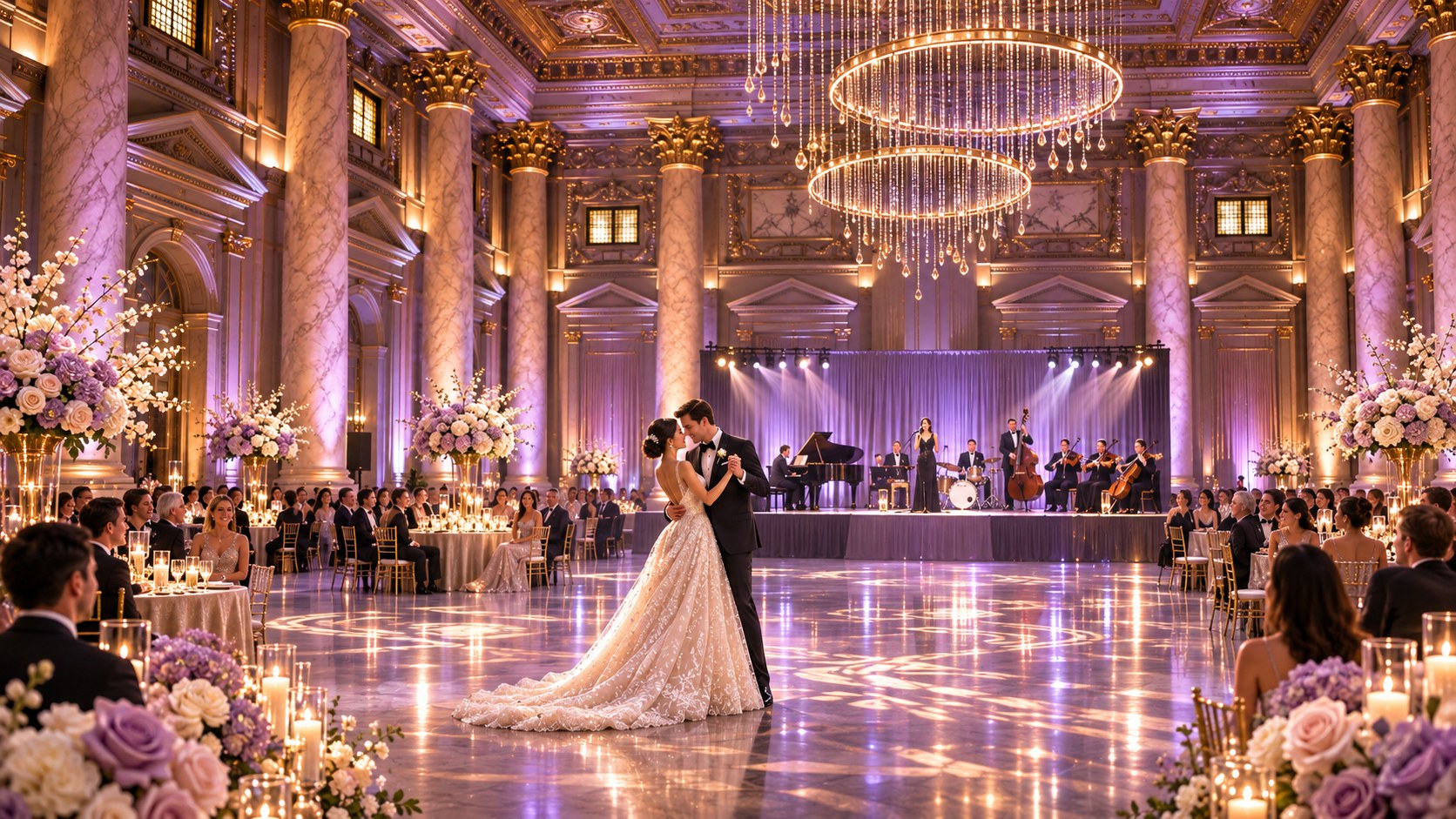
The Layers of a Lighting Design
A luxury lighting design is not a single decision but a set of layered decisions, each addressing a different need. Understanding the layers helps you brief a lighting designer and evaluate proposals. The layers should work as a system, not a collection.
The lighting layers
Ambient light is the base layer — the general illumination that lets guests see and move. In a luxury design, ambient light is kept low and warm, creating a foundation rather than a brightness. Uplighting along the walls, in warm amber or a soft color, is a common ambient approach.
Accent lighting is the directional layer — pin spots on centerpieces, highlights on floral installations, washes on architectural features. This is the layer that makes the design visible. Pin spots on every table centerpiece, for example, make the florals glow rather than disappear into the ambient light.
- Ambient: low, warm uplighting or washes to fill the room
- Accent: pin spots on centerpieces and floral installations
- Architectural: washes or textures on walls, ceilings, and features
- Table: candlelight and low fixtures for intimacy at the place setting
- Dance floor: dynamic, energy-building light for the reception's peak
- Programmed shifts: the lighting changes as the evening progresses
Hiring a Lighting Designer
A lighting designer is a specialist whose work is not interchangeable with a venue's house lighting or a DJ's dance-floor lights. A professional lighting designer thinks about the room as a whole, programs the shifts across the evening, and coordinates with the florist, the venue, and the production team. For a luxury wedding, a lighting designer is an investment that pays for itself in atmosphere.
Review portfolios for the aesthetic you want — dramatic and modern, warm and romantic, or classic and restrained — and choose a designer whose work lives in that world. Discuss the venue, the florals, the format, and the mood you want at each phase of the evening. A good designer will propose a layered plan and explain how it shifts.
Discuss the technical requirements early. Dramatic lighting requires rigging points, sufficient power, and a venue that permits the installation. A lighting designer experienced with your venue, or willing to walk it with you, can confirm what is possible and budget accordingly.
Find Your Wedding Style
Select the aesthetics that resonate with your vision. We'll suggest where to begin.
Recommendation: Select one or more styles above to receive a tailored recommendation.
Lighting the Ceremony
The ceremony lighting sets the emotional tone for the entire day. The goal is soft, flattering light that makes the couple and the wedding party look beautiful and gives the moment a sense of occasion. Harsh or flat lighting undermines the intimacy of the ceremony.
If the ceremony is in the same room as the reception, the lighting must shift between the two. During the ceremony, keep the light soft and focused on the couple and the ceremony structure. As the ceremony ends and the cocktail hour begins, the lighting opens up and warms. A programmed shift makes this transition seamless.
If the ceremony is outdoors or in a space with natural light, plan for the transition as daylight fades. A ceremony that begins in afternoon sun and ends in dusk needs a lighting plan that takes over as the natural light drops. Discuss the timeline with your lighting designer.
Lighting the Reception and Dance Floor
The reception lighting is where the design earns its investment. The room should shift across the evening — warm and settled during dinner, building in energy as the dancing begins, and at full energy for the dance floor. A programmed lighting design creates this arc; static lighting does not.
Reception lighting phases
During dinner, the lighting is warm and low. Pin spots on the centerpieces make the florals glow, candlelight warms the tables, and the ambient light is kept low enough that the room feels intimate. The room should feel like a beautiful dinner, not a banquet hall.
As the dancing begins, the lighting shifts. The dinner light dims, the dance-floor light comes up, and the energy builds. A professional lighting design programs this shift — often coordinated with the first dance — so the transition feels like a moment rather than a switch. The dance-floor light should be dynamic, energy-building, and matched to the music.
- Cocktail hour: warm, open, welcoming light
- Dinner: low, intimate, with pin spots on centerpieces
- Transition: a programmed shift as dancing begins
- Dance floor: dynamic, energy-building, matched to the music
- Late night: the room tightens and intensifies for the final hours
Technical Requirements and Venue Constraints
Lighting design is constrained by the venue's technical capacity — power, rigging, and installation rules. A dramatic design in a venue without the infrastructure to support it is a plan that cannot be executed. Confirm the technical requirements with your venue and lighting designer before committing to a design.
Power is the first constraint. A layered lighting design with uplighting, pin spots, and dance-floor fixtures draws significant power. Confirm the venue's power capacity and whether a generator is needed. Rigging is the second — suspended fixtures require rigging points and ceiling structure. Some venues permit rigging; others do not.
Installation rules matter. Some venues restrict installation times, require certain fixtures, or prohibit open flame. A lighting designer experienced with the venue, or a site visit with the designer, surfaces these constraints early. Plan the design around what the venue allows.
Planning Lighting in NYC
New York City's venues range from landmark ballrooms with full production infrastructure to downtown lofts with flexible rigging. The lighting plan should match the venue's capacity and the celebration's aesthetic. When you are ready to plan your lighting design, submit an inquiry for personalized guidance.
Begin with the venue and its technical capacity. A venue with rigging and power supports a dramatic design; one without may require a simpler approach. Choose a lighting designer whose portfolio matches your aesthetic, and walk the venue together to confirm what is possible.
Plan the room as a system of layers, and program the shifts across the evening. The lighting is the element that makes the room feel designed rather than merely lit. Invest in a professional lighting designer — the atmosphere is worth it.
Related planning resources
Frequently Asked Questions
These common questions address the details couples ask most when researching luxury wedding lighting in New York City.
Why is lighting the most powerful design tool?+
Lighting controls what guests see and how they feel. A beautifully designed room with poor lighting feels flat; a plain room with exceptional lighting feels extraordinary. Lighting directs attention and shapes the mood of each moment.
What are the layers of a luxury lighting design?+
Ambient light to fill the room, accent pin spots to highlight florals, architectural washes to define surfaces, table lighting for intimacy, and dance-floor lighting for energy. The layers work as a system and shift across the evening.
Do I need a professional lighting designer?+
For a luxury wedding, yes. A lighting designer thinks about the room as a whole, programs the shifts across the evening, and coordinates with the florist and venue. House lighting or a DJ's dance-floor lights cannot match a designed system.
What is a pin spot?+
A narrow, directional light focused on a single element — typically a floral centerpiece — to make it glow. Pin spots on every table centerpiece make the florals visible rather than lost in the ambient light. They are a hallmark of luxury lighting.
What color should the uplighting be?+
Warm tones — amber, soft gold, or a warm white — suit most luxury celebrations. Cool tones read as modern; saturated colors can feel dated. The uplighting should complement the room and the design rather than dominate it.
How does lighting shift across the evening?+
A programmed design moves the room from soft ceremony light to warm cocktail light to intimate dinner light to energetic dance-floor light. The shifts are coordinated with the program — the first dance, the toasts — so the transitions feel like moments, not switches.
What lighting suits a romantic wedding?+
Warm, soft, layered light dominated by candlelight and warm washes. Avoid cool tones and harsh directional light. The lighting should feel like sunset — warm, forgiving, and intimate.
What lighting suits a modern wedding?+
Dramatic, directional light — pin spots, architectural washes, defined zones of light and shadow. Modern lighting uses darkness as deliberately as light; the contrast gives the room its drama.
Can I use candles instead of electric lighting?+
Candlelight is a layer of the design, not a replacement for electric lighting. Candles provide warmth and intimacy at the table, but the room still needs ambient, accent, and dance-floor light. Plan the candles as part of the system.
What technical requirements does dramatic lighting need?+
Power for the fixtures, rigging points for suspended pieces, and a venue that permits the installation. Confirm the venue's capacity with your lighting designer before committing to a design. A dramatic plan in a venue without the infrastructure cannot be executed.
How do I light an outdoor or daylight ceremony?+
Plan for the transition as daylight fades. A ceremony that begins in afternoon sun and ends in dusk needs a lighting plan that takes over as the natural light drops. Discuss the timeline with your lighting designer.
What is gobo lighting?+
A gobo is a stencil placed in a light to project a pattern — a monogram, a texture, a design — onto a surface. Monogram gobos on the dance floor are a classic luxury detail. Discuss the option with your lighting designer.
How do I coordinate lighting with the band or DJ?+
The lighting and the music should work together, especially on the dance floor. Introduce your lighting designer and your band or DJ, and have them coordinate the dance-floor light with the music. The two should feel synchronized.
What should I ask a lighting designer?+
Ask about their approach to layering, their experience with your venue, how they program the shifts across the evening, and the technical requirements. A good designer will walk the venue with you and propose a layered plan.
How much does luxury lighting cost?+
Lighting costs vary based on the scope — the number of fixtures, the installations, the programming. It is an investment that pays for itself in atmosphere. Discuss the budget with your designer; they can scale a plan to fit.
Can lighting make a plain venue look luxurious?+
Yes — lighting is the most transformative design element. A plain room with exceptional lighting feels extraordinary. This is why a lighting designer is an investment, not an afterthought, for a luxury wedding.
What is the difference between a lighting designer and a DJ's lights?+
A lighting designer plans the room as a system of layers and programs the shifts across the evening. A DJ's lights are typically dance-floor fixtures added on the night. For a luxury wedding, the designed system is what creates the atmosphere.
How do I light a floral installation?+
Pin spots or washes on the installation make it visible and dramatic. An unlit floral installation, especially overhead, disappears into the room. Discuss the key pieces with your lighting designer so they are highlighted.
Should the lighting match the time of day?+
The lighting should feel appropriate to the phase of the evening — softer and warmer early, building in energy as the night progresses. A programmed design creates this arc naturally; static lighting does not.
How do I begin planning lighting in NYC?+
Start with the venue and its technical capacity, choose a lighting designer whose portfolio matches your aesthetic, and plan the room as a system of layers. Submit an inquiry for personalized guidance on your lighting design.