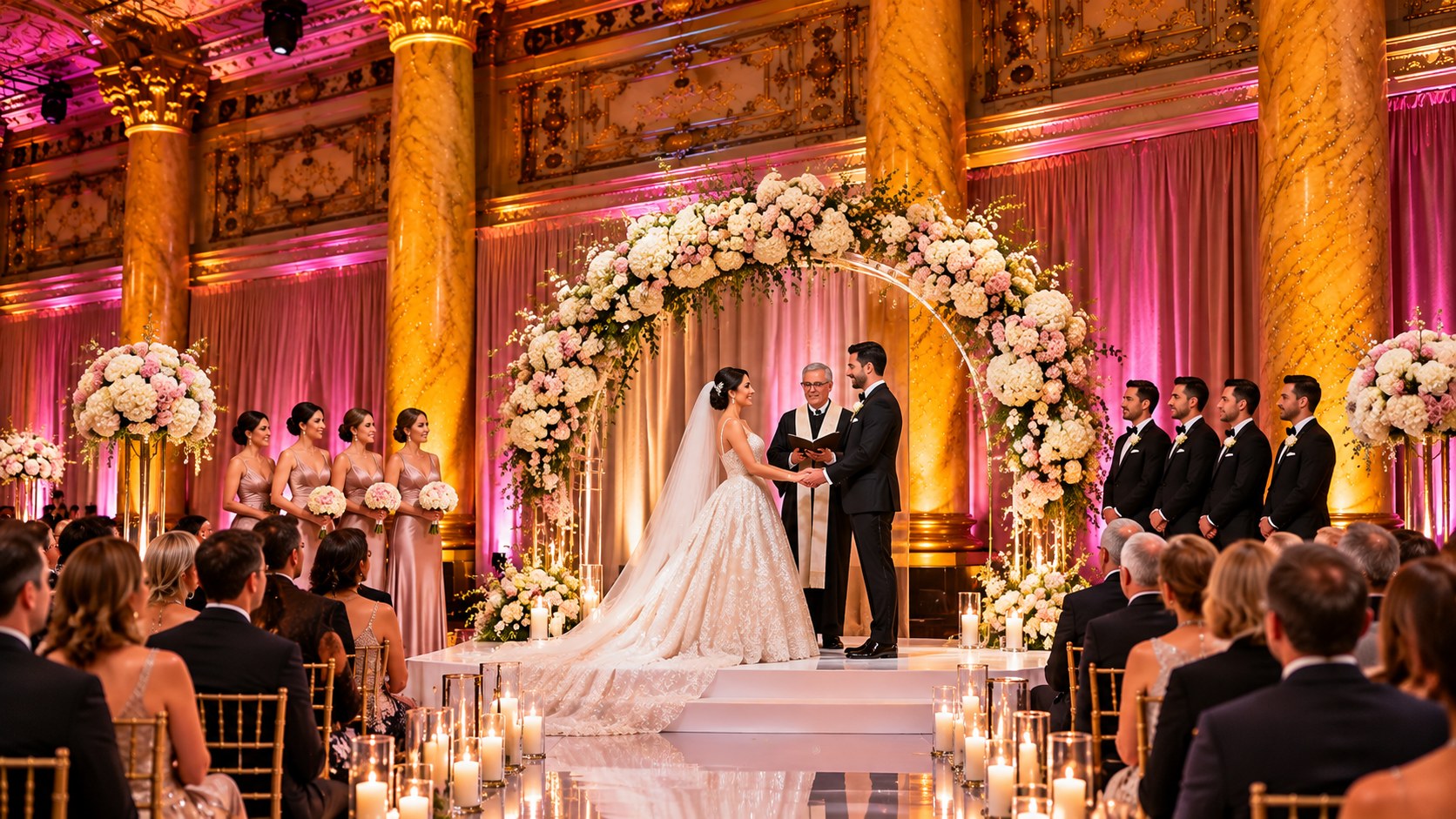
A formal wedding is an event with structure — a defined dress code, a seated dinner, a planned program of toasts and dances, and an atmosphere of considered elegance. The venue for a formal wedding in NYC must support this structure: a room that holds a seated dinner beautifully, a service team trained in formal service.
This guide covers what makes a venue in NYC suited to a formal wedding, how to plan the formal elements, and how to balance structure with warmth so the evening feels elegant rather than stiff.
Characteristics of a Formal Wedding Venue
Formal venues tend to share certain qualities. They have architectural presence — the kind of space that warrants a black-tie dress code. They accommodate a seated dinner at scale. They have a service team capable of formal plated service. And they have an aesthetic that is refined rather than rustic, structured rather than free-form.
What to look for
- Architectural presence that suits a formal dress code
- Capacity for a seated dinner at your guest count
- A service team experienced in formal plated service
- A refined aesthetic — classic, modern, or landmark
- Space for a program of toasts, dances, and formal moments
The Formal Dinner
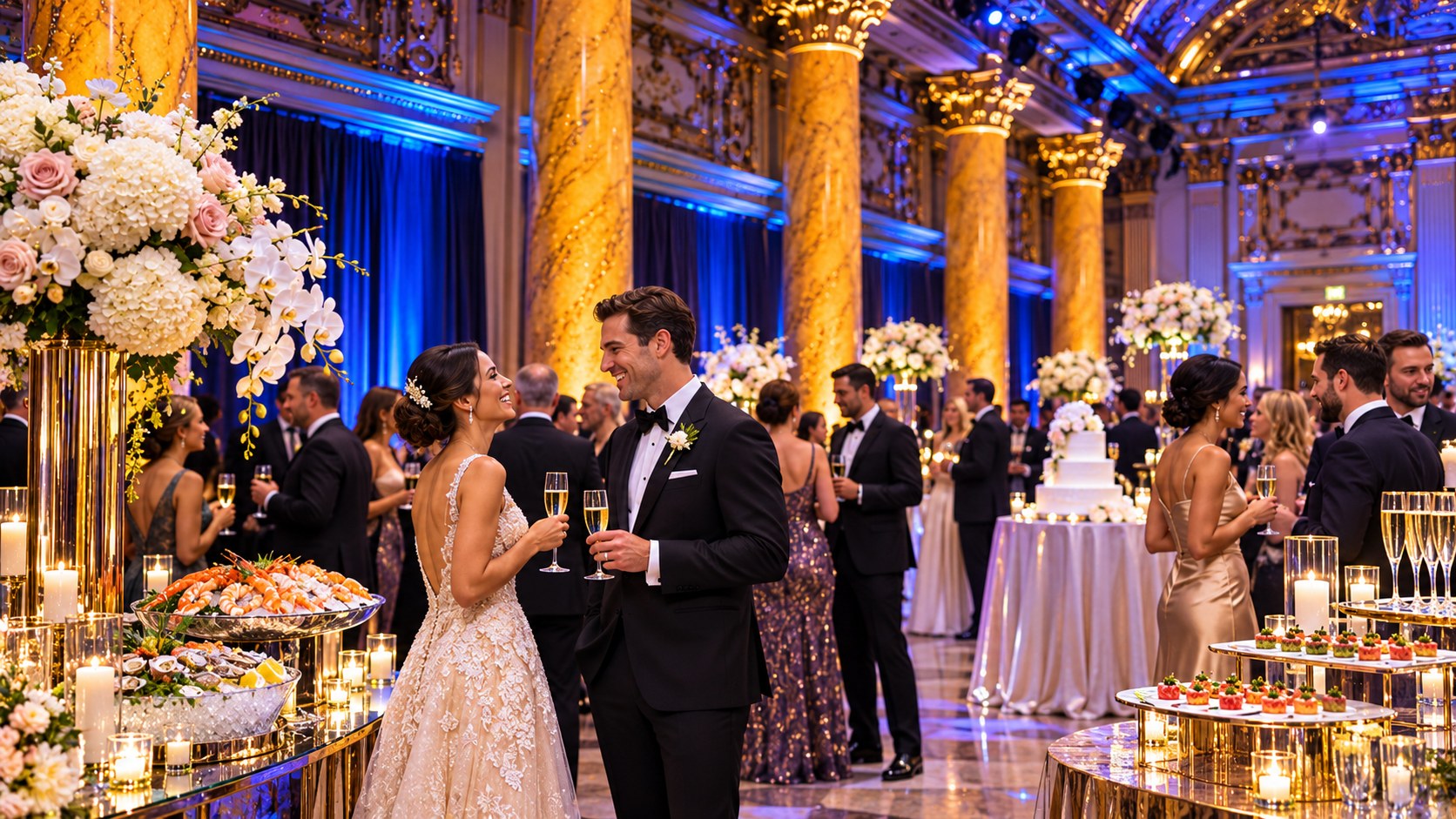
The seated dinner is the centerpiece of a formal wedding. It demands a venue with the right proportions, a kitchen built for plated service at scale, and a service team that executes it gracefully. Discuss the dinner format with your venue — number of courses, service style, timing — and confirm their experience with dinners at your guest count.
Formal service has its own conventions: synchronized plating, coordinated clearing, wine service timed to courses. A venue and caterer experienced in formal service make this look effortless; one that is not will struggle. Ask to speak with the service lead and, if possible, attend a tasting that demonstrates service style.
The Formal Program
A formal wedding typically includes a program of structured moments: toasts, first dance, parent dances, cake cutting, and sometimes a formal presentation or blessing. The venue must accommodate this program — a stage or focal area for toasts, a dance floor for formal dances, and a timeline that gives each moment room. Plan the program with your venue and planner so the evening flows rather than stopping and starting.
Typical formal program elements
- Welcome and blessing or grace
- Toasts from hosts, wedding party, and family
- First dance and parent dances
- Dinner service with wine pairings
- Cake cutting or dessert presentation
- Open dancing and late-night celebration
Dress Code and Atmosphere
A formal dress code — black-tie or formal — sets guest expectations and shapes the atmosphere. Communicate the dress code clearly on your invitation and, if helpful, on a wedding website. The venue should match the formality; a venue that reads as formal reinforces the dress code and elevates the entire evening.
Balance formality with warmth. The most successful formal weddings feel elegant but not stiff — guests are comfortable, the pace is relaxed enough for conversation, and the structure serves the celebration rather than constraining it. A skilled host and a good timeline achieve this balance.
Ceremony Considerations for a Formal Wedding
A formal ceremony often follows traditional structure — a processional with attendants, readings, vows, and a recessional. The venue should support this with a processional pathway, seating that gives every guest a good view, and acoustics or sound reinforcement that carry the ceremony clearly. Discuss the ceremony layout with your venue and plan the processional deliberately.
Guest Experience and Seating
Guests at a formal wedding expect a polished, hosted experience. Arrival should be smooth, service attentive, and the program clear. Signage, when used, should be elegant. A formal venue with an experienced team makes this feel natural. Walk through the guest experience from arrival to departure and address any friction.
Guest Experience Checklist
0/12Planning and Budgeting a Formal Wedding
Formal weddings benefit from early, detailed planning because they involve more structured elements. Engage a planner or venue coordinator experienced in formal events, and build a detailed timeline that accounts for every program element. Formal weddings tend to cost more per guest because of the plated dinner, formal service, and structured program — budget accordingly.
Wedding Budget Planning Worksheet
Enter your total budget to see a transparent suggested allocation. Percentages are illustrative starting points.
Assumptions: percentages are industry-typical starting points; adjust to your priorities. This is a planning aid, not a quote.
Frequently Asked Questions
These common questions address the details couples ask most when researching formal wedding venues in nyc in New York City.
What should I look for when researching formal wedding venues in nyc in New York City?+
Focus on capacity for your guest count, architectural character, service standards, and the venue's experience with events at your scale. Tour a few representative options, use a consistent checklist at every visit, and request proposals from your shortlist before deciding.
How far in advance should I book formal wedding venues in nyc in NYC?+
The most sought-after luxury settings in New York City book twelve to eighteen months ahead. Peak season (May through October) and popular weekends fill first, so begin research early and move quickly once you find the right fit.
What is the capacity I should plan for with formal wedding venues in nyc?+
Capacities vary by format. Our featured setting accommodates 550 seated guests or up to 1,500 standing. Always confirm seated versus standing capacity for your specific format, since the guest experience differs significantly between a plated dinner and a standing reception.
Do formal wedding venues in nyc host both ceremony and reception?+
Many do. Ask how the venue manages the transition between ceremony and reception, whether there is a separate cocktail area, and how long the turnover takes. A well-managed transition is invisible to guests; a poorly managed one creates awkward downtime.
What questions should I ask when touring formal wedding venues in nyc?+
Ask about capacity for your format, included amenities, service staff ratios, catering policy, production infrastructure, exclusivity terms, and the full cost including service charge and taxes. Our questions-to-ask guide provides a complete checklist.
How much do formal wedding venues in nyc in NYC typically cost?+
Costs vary widely based on scale, exclusivity, and what is included. Compare venues on the total cost of the evening — site fee, catering minimums, service charges, rentals, and production — rather than the headline site fee alone.
Are formal wedding venues in nyc available year-round in New York City?+
Most indoor luxury venues operate year-round. Rooftop and outdoor settings are typically seasonal (roughly May through October). Confirm availability for your date and any seasonal considerations. A winter indoor celebration offers reliable comfort and often better availability.
Can I fully customize the decor at formal wedding venues in nyc?+
Most luxury venues allow significant customization within their guidelines. Ask about rigging points, electrical capacity, restrictions on candles or installations, and load-in logistics. Venues with strong event infrastructure support more ambitious design.
Do formal wedding venues in nyc include in-house catering?+
Some venues include in-house catering; others allow outside caterers or require selection from a preferred list. Confirm the catering policy and how it affects your menu options and overall budget.
What is the difference between seated and standing capacity at formal wedding venues in nyc?+
Seated capacity accommodates a plated dinner with tables; standing capacity accommodates a cocktail reception. A venue that seats 550 may hold far more standing, but the flow, comfort, and pacing differ. Choose based on your preferred format.
How do I ensure guest comfort at formal wedding venues in nyc?+
Plan for smooth arrival, coat check, comfortable temperature, sufficient restrooms, attentive service, clear signage, and accessible seating for those who need it. Walk through the guest experience from arrival to farewell and address any friction with your venue team.
Do formal wedding venues in nyc offer exclusivity?+
Exclusivity varies by venue — full buyout, single-event, or shared common areas. Confirm exactly what exclusivity means at each venue and have it specified in your contract. See our wedding venue exclusivity guide for detail.
Which NYC neighborhoods are best for formal wedding venues in nyc?+
Manhattan offers the highest density of luxury venues. Midtown is known for grand ballrooms, the Upper East Side for classic elegance, and Downtown (Tribeca, SoHo) for loft settings. Explore our NYC area guides for neighborhood-specific planning considerations.
Can formal wedding venues in nyc accommodate dietary restrictions?+
A quality luxury venue accommodates vegetarian, vegan, kosher, halal, and allergy-specific needs. Discuss dietary requirements early and ensure every guest has a considered option, not an afterthought.
What is the service charge at formal wedding venues in nyc?+
Service charges typically range from 20% to 28% on top of food and beverage, plus applicable tax. Confirm the full cost structure — site fee, catering minimums, service charge, gratuity, and taxes — when comparing venues.
Do formal wedding venues in nyc provide a wedding coordinator?+
Many luxury venues provide a venue coordinator for logistics, but that role is distinct from a full wedding planner. A venue coordinator manages the venue side; a planner manages your entire event. Consider whether you need both.
How should I tour formal wedding venues in nyc in NYC?+
Schedule tours, ideally when the space is set for an event so you can see it in action. Bring a consistent checklist, take photos, and note your impressions immediately after each visit while details are fresh.
What is typically included in the venue fee for formal wedding venues in nyc?+
Inclusions vary. Some venue fees cover only the space; others include tables, chairs, basic lighting, and a coordinator. Clarify exactly what is included and what you must rent or bring in separately so you can compare total costs.
Can formal wedding venues in nyc accommodate a large guest list?+
Yes, many luxury NYC venues accommodate large guest lists. Our featured venue seats 550 and holds up to 1,500 standing. Confirm capacity for your format and ask how the venue manages logistics at scale.
How do I begin planning my wedding with formal wedding venues in nyc?+
Start by clarifying your vision and guest count, then research venues that fit. Tour representative options, request proposals, and ask thorough questions. When ready, submit an inquiry through our form to receive personalized guidance.